Men’s Style Guide India: Formal, Casual & Smart Casual Dressing + Grooming Tips
Most Indian men own clothes. Very few Indian men have a wardrobe. There's a difference. A wardrobe is intentional — pieces that work together, fit properly, and cover every situation you're likely to walk into. What most guys have instead is a pile: five nearly-identical blue shirts from Flipkart sales, two ill-fitting blazers from a cousin's wedding, jeans they've been wearing since 2019, and a kurta that only comes out for Diwali. This guide is about fixing that — systematically, without blowing your budget, and without needing a "fashion sense" you feel like you were never born with.
Building Your Formal Wardrobe
Let's start with the hard truth: 90% of Indian men's formal wear doesn't fit. Shoulders that extend past the shoulder bone, sleeves that bunch at the wrist, trousers that pool around the ankles like deflated balloons. Fit is not a "nice to have" in formal wear — it's the entire game. A ₹4,000 blazer that fits perfectly will always look better than a ₹20,000 one that doesn't.
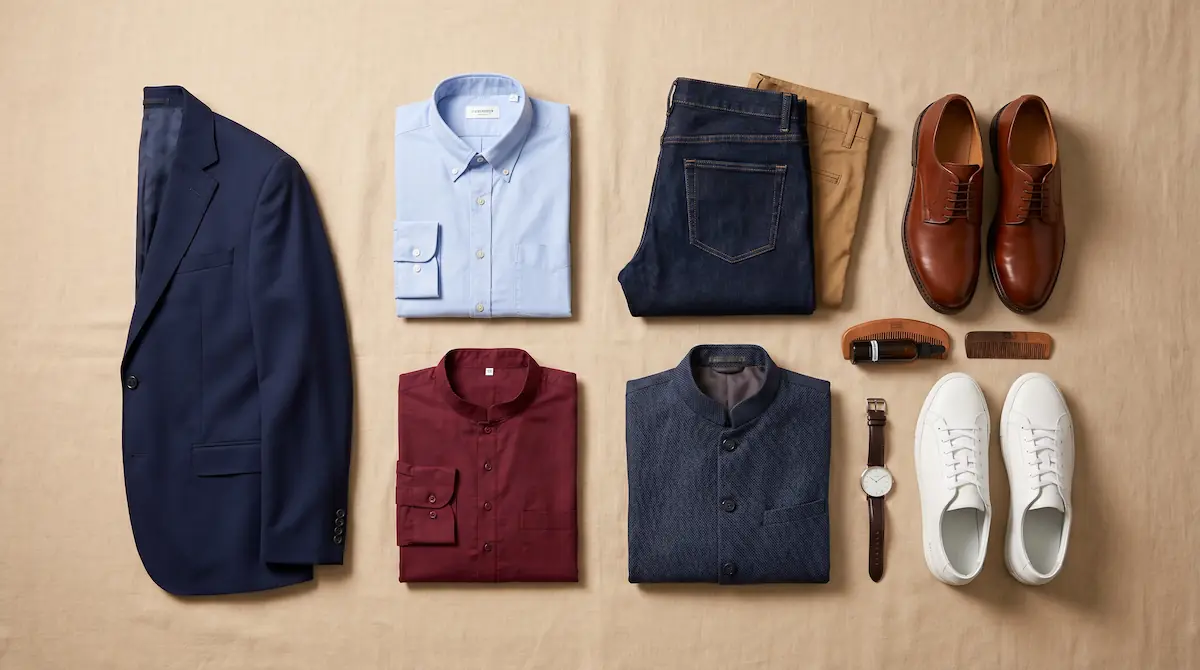
The essentials. You need exactly one well-fitted navy blazer — not black (too stark for Indian skin tones unless you're very fair with cool undertones), not grey (too easy to look washed out). Navy works across the board. Pair it with mid-grey and charcoal trousers, not matching navy — that creates a suit look when you're not wearing a suit, which reads as awkward. A white Oxford shirt and a light blue one cover 80% of formal situations. Get them tailored or buy slim-fit and take them to an alteration shop. The ₹200 you spend on alterations is the highest-ROI style investment you'll make.
For shoes, a pair of dark brown derbies is more versatile than black oxfords in the Indian context. Black shoes demand a black belt and black trousers — it's rigid. Brown works with navy, grey, beige, even dark green. If you can only own one pair of formal shoes, make them brown.
Indian formal has its own lane. A well-fitted bandhgala in navy or charcoal is the single most versatile Indian formal piece you can own — it works for weddings, official dinners, corporate events, and even replaces a blazer when you want to stand out. Get it tailored. Off-the-rack bandhgalas almost never fit in the shoulders and waist simultaneously. A good tailor in any Indian city — Chandni Chowk in Delhi, Commercial Street in Bangalore, Linking Road in Mumbai — will make one for ₹5,000–₹12,000 depending on fabric, and it'll last you a decade.
Smart Casual: The Most Versatile Dress Code
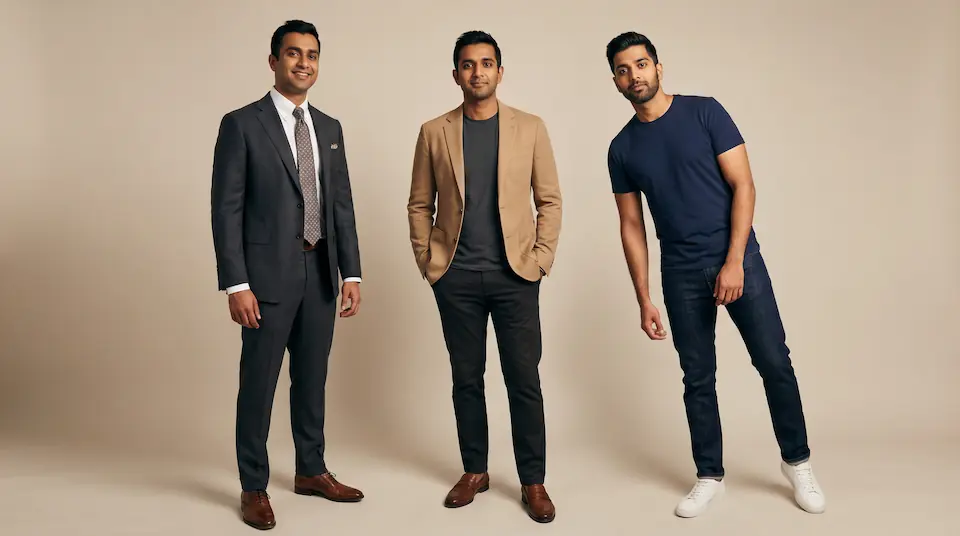
Smart casual is the dress code most Indian men get wrong. It's not "formal minus the tie." It's not a blazer over a t-shirt (though that can work — more on that in a moment). Smart casual is a deliberate blend of structured and relaxed pieces where neither category dominates.
Smart casual is the dress code most Indian men get wrong — it's not "formal minus the tie." It's a deliberate blend of structured and relaxed pieces.
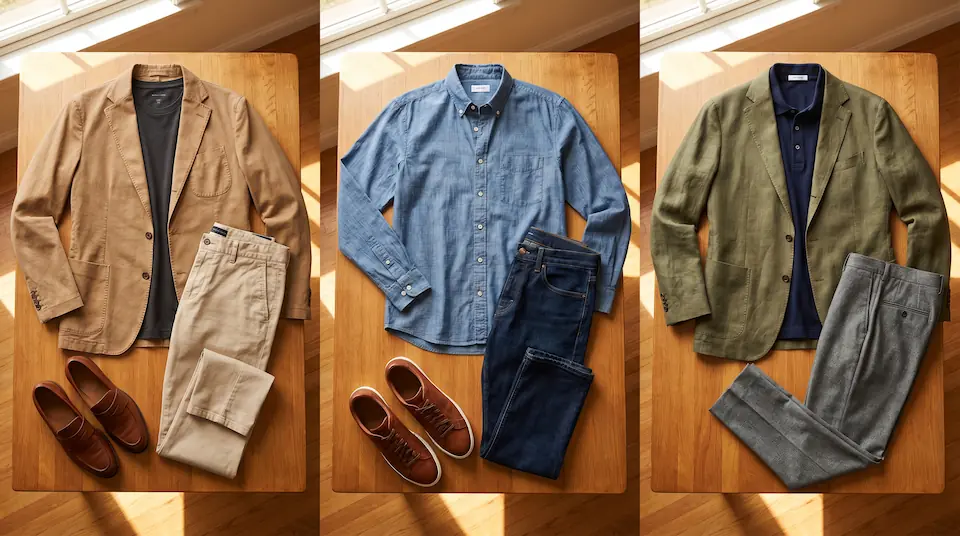
The formula is simple: one structured piece + one relaxed piece + clean footwear. A blazer (structured) with chinos and a crew-neck tee (relaxed) and loafers (clean). Or a chambray shirt (structured-ish) with dark denim (relaxed) and leather sneakers (clean). The mistake is going full casual (t-shirt + jeans + sneakers) or full formal (blazer + dress shirt + trousers) and calling it smart casual. Neither of those is smart casual. They're just casual and formal, respectively.
Fabric matters more in smart casual than in any other dress code. Linen-blend blazers in summer, unstructured cotton blazers in monsoon, wool-blend in winter. The Indian climate kills formal structure — heavy wool blazers become sweat traps by 11 AM in Mumbai — so lighter, less structured fabrics are your friend. A good unlined cotton blazer in olive or tan is the most underrated item in Indian menswear.
Casual Style That Still Looks Intentional
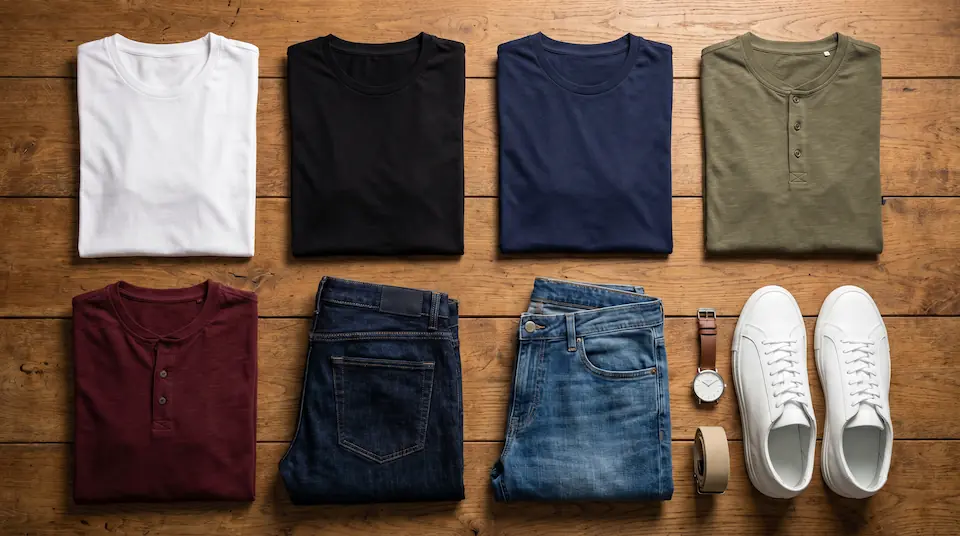
Here's the difference between "casual" and "lazy": intention. A white crew-neck tee with well-fitted dark jeans and clean white sneakers is casual. A stretched-out promotional t-shirt with baggy jeans and scuffed Bata shoes is lazy. The items aren't dramatically different in price — the difference is fit, condition, and coordination.
The casual wardrobe should have three kinds of t-shirts: plain crew-necks in white, black, and navy (these are your foundation — buy good quality, ₹800-₹1,500 each, not ₹299 sale tees that lose shape after two washes); one or two henley tees (the most flattering casual neckline for men — it draws the eye vertically and works on every body type); and maybe one or two patterned tees if you like them, but patterns should be subtle — small stripes, micro prints, nothing that looks like a bedsheet.
Denim: own two pairs. One dark indigo, one medium wash. Dark indigo can dress up or down — wear it with a blazer and you're smart casual, wear it with a tee and you're weekend-ready. Medium wash is strictly casual but reads as effortless when it fits right. Fit: slim or tapered, not skinny (skinny died in 2019) and not boot-cut (that died earlier). The hem should sit at the top of your shoe with zero break or a very slight break.
Dressing for Indian Occasions: Kurtas, Nehru Jackets & Beyond
Indian occasion dressing is where most men either play it too safe (plain white kurta-pyjama for everything) or go too hard (heavily embroidered sherwani for a simple puja). The key is matching the formality of your outfit to the formality of the event — same principle as Western dress codes, different vocabulary.
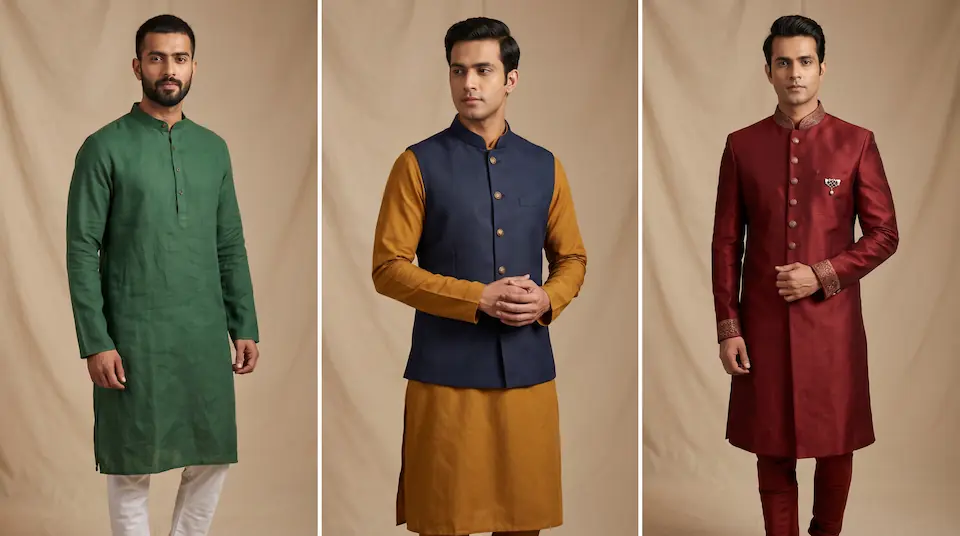
A plain cotton or linen kurta in a rich color — forest green, deep mustard, burgundy — with white churidar or straight-cut pyjama is the most versatile Indian outfit. It works for Diwali at home, temple visits, family dinners, and casual festive gatherings. Avoid stark white for everything unless you're specifically going for the political-rally look. Color makes you look like you actually thought about it.
A Nehru jacket over a plain kurta elevates the look one full tier. A printed or textured Nehru jacket over a solid kurta, not the reverse — patterned kurta with a plain jacket looks backward. Deep jewel tones work best for the jacket: emerald, navy, maroon. An antique gold or silver button detail reads as intentional without being flashy.
For weddings and high-formality events, a sherwani or bandhgala with proper churidar (not pyjama — churidar reads more formal) is the standard. Fabric matters enormously: raw silk for winter weddings, cotton-silk blend for summer. Brocade and heavy embroidery are for the groom's family, not the general guest list. As a guest, subtle texture and rich color will always outperform heavy ornamentation. For a ceremony-by-ceremony breakdown — haldi, mehendi, sangeet, reception — see our complete Indian wedding guest guide.
Beard Styles That Complement Your Face Shape
Your beard is as much a styling choice as your outfit. Most men grow whatever comes in and never think about shaping it to match their face — which is like buying clothes without checking if they fit. The wrong beard shape can undo the work of a perfectly fitted suit.
Your beard is as much a styling choice as your outfit. The wrong beard shape can undo the work of a perfectly fitted suit.
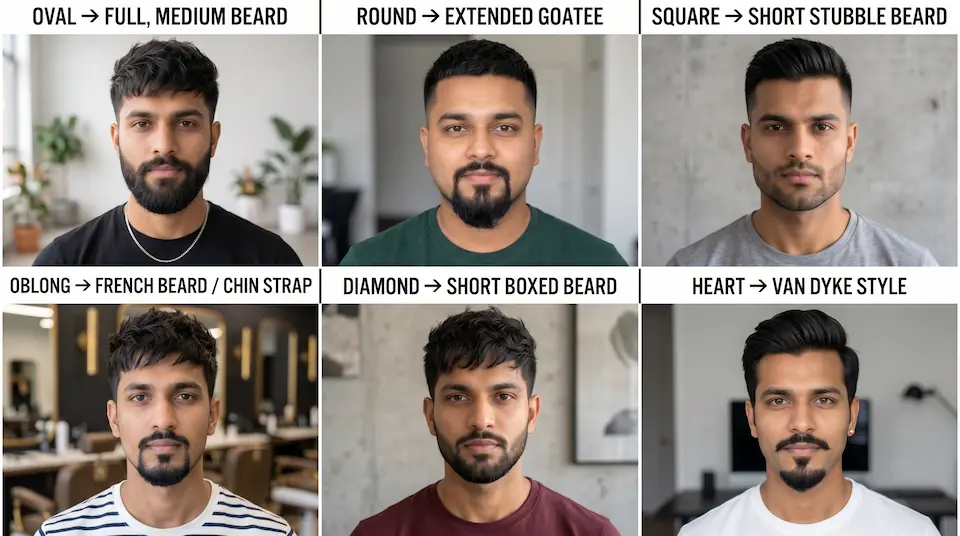
Round face: You need angles. A goatee or extended goatee is the most effective beard style for a round face — it adds vertical length to the chin and creates an angular frame where the face has none naturally. Keep the sides trimmed short and the bottom slightly pointed. A full, bushy beard with no shape definition will make a round face look rounder.
Oval face: Almost any beard style works. A full, well-maintained medium beard is the classic choice — it adds maturity without distorting proportions. Short stubble (3-5mm) is excellent for a cleaner look. The french beard (soul patch + chin strip + mustache) adds a distinctive edge without overwhelming the face.
Square face: A short boxed beard or heavy stubble that follows the jawline enhances the already-angular structure. Let the beard be slightly longer on the chin to elongate, and keep the cheek line natural rather than high. Avoid very sharp cheek lines — on a square face, they can look overly severe.
Oblong face: Fullness on the sides, shorter at the chin. This is the one face shape where a full, wide beard genuinely helps — it adds width to balance the length. A short chinstrap or goatee is the worst choice here because it adds more length to an already-long face. Mutton chops (the modern, trimmed kind) or a full beard with side volume do the job.
Diamond face: A short boxed beard with some chin length adds width to the narrow jaw and balances the wide cheekbones. Keep sideburns moderate — very full sideburns on a diamond face add width at the cheekbone level, which is exactly where you don't need it.
Heart face: A full beard with rounded bottom adds volume to the narrow chin — exactly what a heart face needs. If a full beard isn't your style, even heavy stubble with a bit more growth on the chin helps. Clean-shaven actually works on heart faces too, since the wide forehead and defined cheekbones create a strong look on their own. What doesn't work: a goatee without any cheek beard, which accentuates the narrow chin.
A note on mustache styles: the classic Indian mustache — thick, well-groomed, with slight downward tips — works on round, oval, and square faces. Handlebar mustaches suit oblong faces because they add horizontal width. Thin pencil mustaches are risky on any face shape and generally age the wearer. If you're growing a standalone mustache, keep it proportional to your lip width and maintain sharp edges. For a deeper dive into how face shape affects your hairstyle choice — including the best cuts for each shape — read our complete face shape hairstyle guide.
Dressing for Your Body Shape
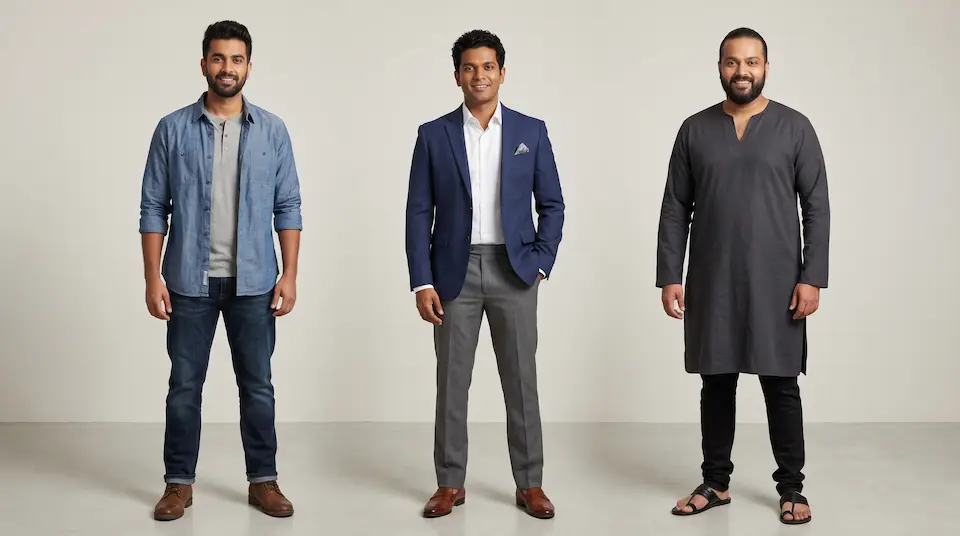
Every piece of clothing advice in this guide gets 10x more effective when you know your body shape. Not your size — your shape. Two men can both be "Medium" and have completely different proportions. One has broad shoulders and a narrow waist (trapezoid), the other has a fuller midsection and narrower shoulders (oval). The same shirt looks completely different on them.
Trapezoid (broad shoulders, narrow waist): You're the "classic" build, and most off-the-rack clothes are designed for you. Fitted shirts, single-breasted blazers, and straight or tapered trousers all work. Your main risk is going too tight — you have the build to pull off fitted, but skin-tight makes you look like you're trying too hard.
Oval (fuller midsection): Vertical lines are your friend. Dark, solid-colored kurtas that fall straight without cinching at the waist, V-neck tees that create a downward line, and unstructured blazers in dark tones all elongate the torso. Avoid anything that draws a horizontal line across the midsection — contrast belts, tucked-in shirts that billow over the waistband, and tight-fitting polo shirts. A well-fitted (not tight, not loose) shirt in a slightly heavier fabric that doesn't cling is the ideal.
Inverted Triangle (very broad shoulders, narrow hips): Avoid heavily padded blazer shoulders — you don't need the help. Raglan sleeves and softer shoulder constructions balance out the top-heavy look. Straight-leg or slightly wider trousers add visual weight to the lower body, creating proportion.
For a detailed breakdown of all 12 body shape categories and how to identify yours, see our complete body shape guide.
Building a Capsule Wardrobe: The Cost-Per-Wear Approach
The average Indian man spends about ₹58,000 a year on clothing but wears only 35% of it regularly. That's ₹38,000 wasted annually on clothes that sit in the wardrobe. The fix isn't buying less — it's buying smarter. A capsule wardrobe of 20 well-chosen pieces can cover more situations than a chaotic wardrobe of 80.
The concept is cost-per-wear. A ₹12,000 navy blazer you wear 50 times costs you ₹240 per wear. A ₹3,000 trendy jacket you wear 3 times costs ₹1,000 per wear. The blazer is the better investment by a factor of 4, even though it cost 4 times more upfront.
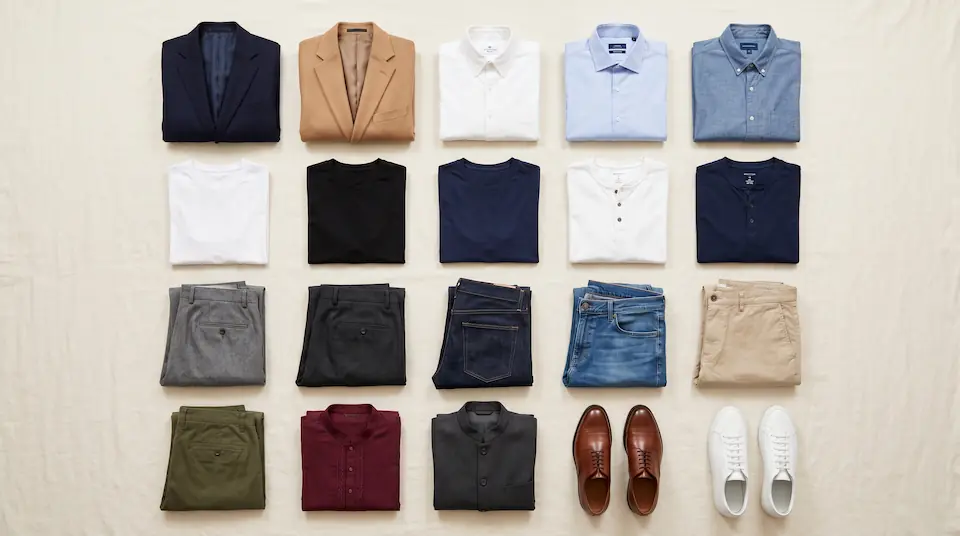
The 20-piece capsule for Indian men: 2 blazers (navy, unstructured tan/olive), 3 formal/smart shirts (white Oxford, light blue, chambray), 3 casual tees (white, black, navy), 2 henleys, 2 trousers (mid-grey, charcoal), 2 denim (dark indigo, medium wash), 2 chinos (beige, olive), 1 kurta (deep jewel tone), 1 Nehru jacket, 1 formal shoe (brown derby), 1 casual shoe (white leather sneaker). That's 20 pieces that generate over 100 combinations spanning every dress code from casual Friday to a friend's wedding reception.
Use the Style Math Wardrobe Calculator to figure out your personal wardrobe waste numbers, and let the AI show you which silhouettes and colors work for your specific body before you spend a rupee.
See these styles on your body
Upload a photo and get AI-powered outfit recommendations tailored to your body shape and skin tone.
Download FreeRelated Articles
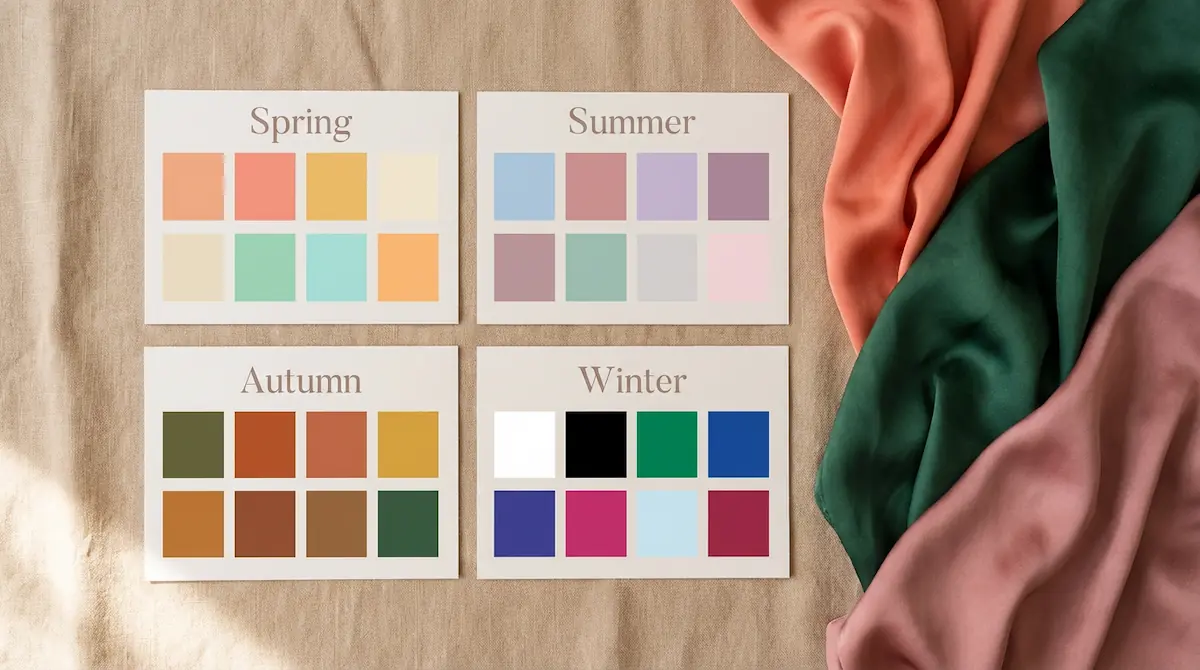
What Is Color Analysis? A Complete Guide to Finding Your Best Colors
Color analysis determines which colors complement your natural skin tone, hair, and eyes. Learn about the seasonal color system, undertones, and how AI makes color analysis accessible to everyone.
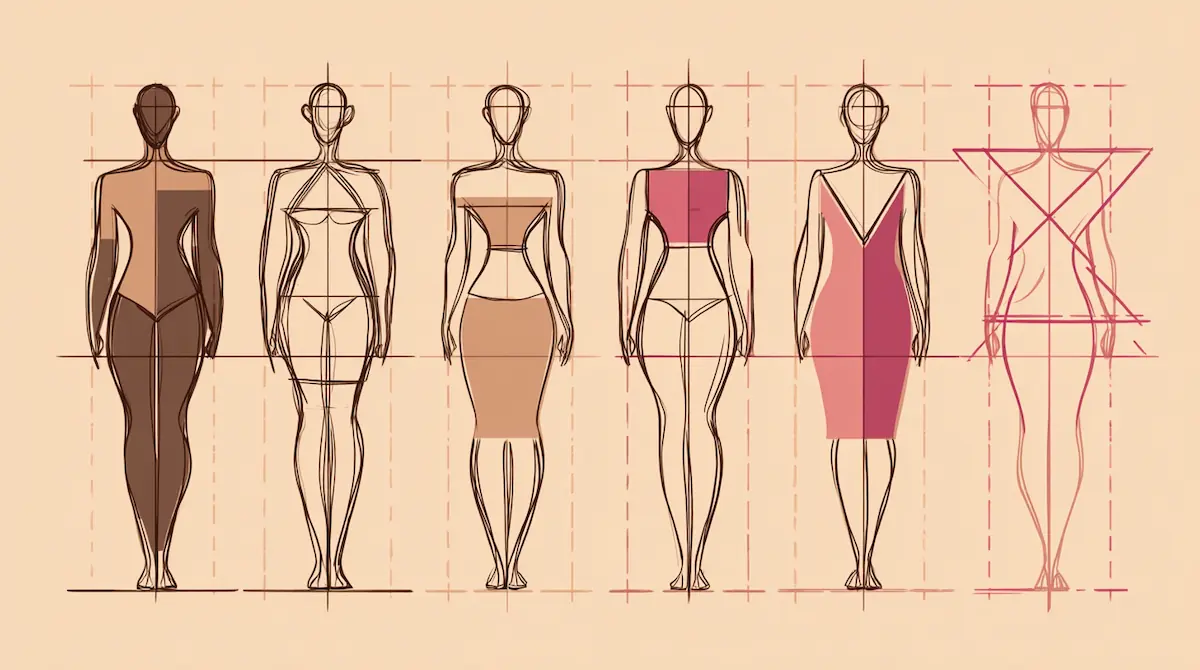
How to Find Your Body Shape: A Data-Driven Guide for Men and Women
Learn how to identify your body shape from 12 categories using key measurements. Understand why body shape analysis matters for choosing flattering clothing, with specific tips for Indian body types.