
How Much Do Indians Spend on Clothes They Never Wear? Wardrobe Waste Statistics 2026
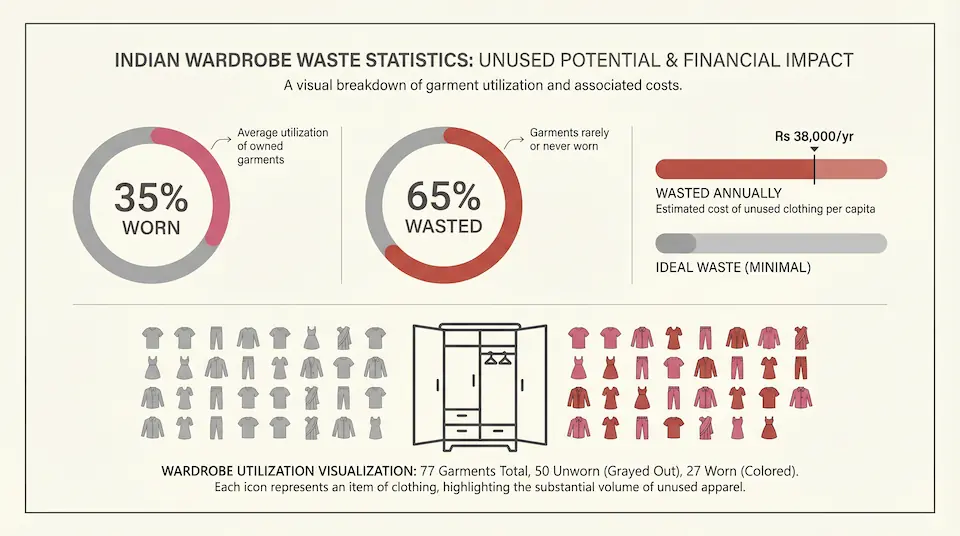
The average Indian consumer wears only 35% of their wardrobe regularly, effectively wasting approximately ₹38,000 per year on clothes that sit unused. This isn't just a personal finance problem — it's an environmental crisis. India is now the world's second-largest textile producer, and the country generates over 7.5 million tonnes of textile waste annually.
The Numbers: Indian Wardrobe Waste
- ₹58,000 — average annual clothing expenditure per Indian consumer (source: CMAI India Textile Report 2025)
- 35% — percentage of wardrobe items worn regularly
- 65% — percentage of clothing purchases that go underused or completely unworn
- ₹38,000 — approximate annual value of wasted clothing per person
- 77 items — average wardrobe size in Indian urban households
- 27 items — number actually worn in a typical month
Why Do We Buy Clothes We Don't Wear?
Research identifies four primary causes of wardrobe waste:
- Color mismatch — buying colors that looked good on the rack but don't complement your skin tone (accounts for ~30% of returns and regrets)
- Fit and proportion errors — clothes that don't suit your body shape, creating an unflattering silhouette (~25%)
- Occasion disconnect — buying aspirational pieces for events that never materialize (~20%)
- Trend chasing — purchasing trendy items that fall out of fashion before they're adequately worn (~25%)
The Environmental Impact
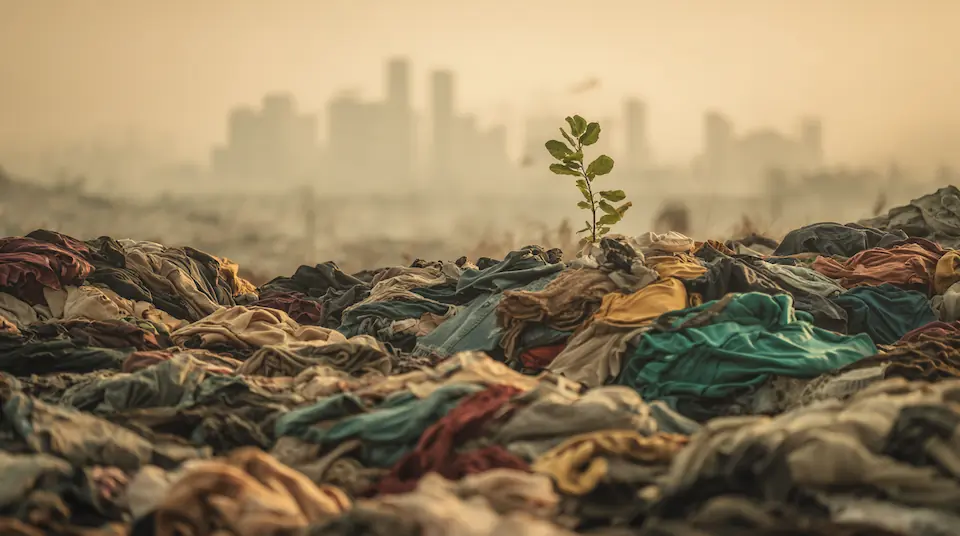
India's textile waste problem is accelerating. The country's fashion industry is growing at 10-12% annually, but textile recycling infrastructure handles less than 15% of post-consumer waste. The remaining 85% ends up in landfills or is incinerated. The environmental cost is significant:
- A single cotton t-shirt requires approximately 2,700 liters of water to produce
- The fashion industry accounts for 8-10% of global carbon emissions — more than international flights and maritime shipping combined
- Synthetic fabrics (polyester, nylon) shed microplastics during washing, contributing to water pollution
Reducing wardrobe waste isn't just about saving money — it's one of the most impactful individual actions for reducing your environmental footprint.
How AI Styling Reduces Waste
AI-powered personal stylists attack wardrobe waste at its root: the purchase decision. By analyzing your body shape, skin tone, and personal style preferences before you buy, AI eliminates the two biggest sources of waste (color mismatch and proportion errors).
Style Math AI generates outfit visualizations on your actual body photo, showing you exactly how a garment will look on you — not on a model with different proportions and coloring. This "try before you buy" approach has been shown to reduce purchase regret by up to 40% in early user studies.
Calculate Your Own Wardrobe Waste
Want to know how much of your wardrobe is going to waste? Use the Style Math Wardrobe Calculator — a free tool that estimates your personal wardrobe waste based on your spending habits and wearing patterns. It takes 60 seconds and provides personalized insights.
See these styles on your body
Upload a photo and get AI-powered outfit recommendations tailored to your body shape and skin tone.
Download FreeRelated Articles
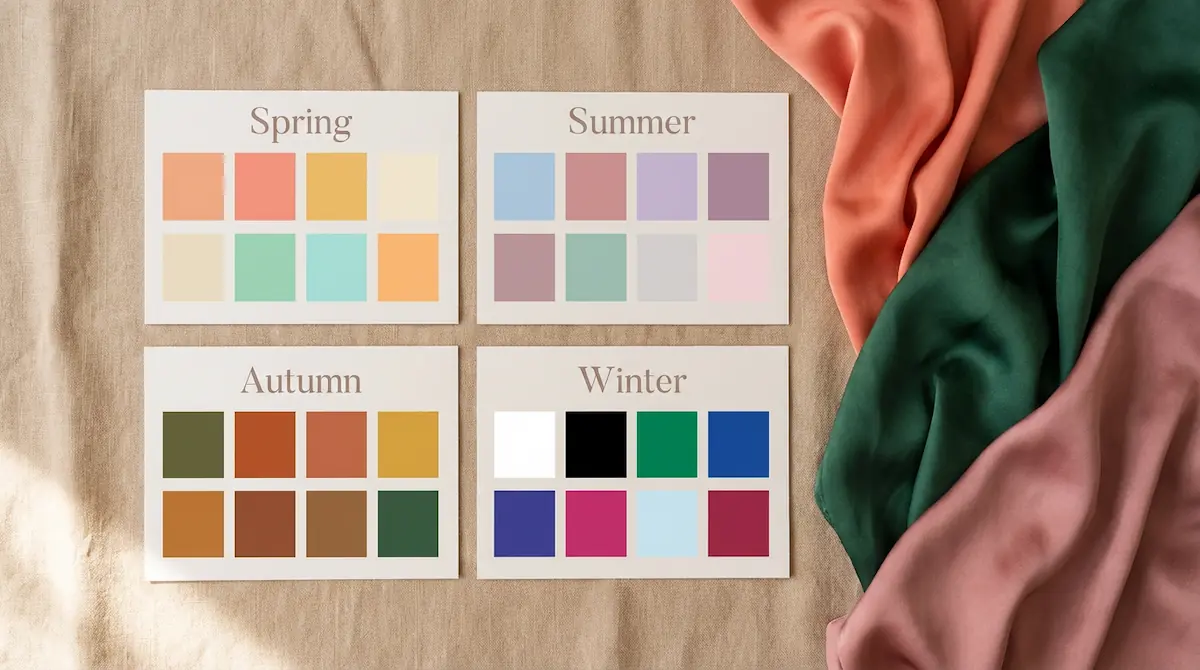
What Is Color Analysis? A Complete Guide to Finding Your Best Colors
Color analysis determines which colors complement your natural skin tone, hair, and eyes. Learn about the seasonal color system, undertones, and how AI makes color analysis accessible to everyone.
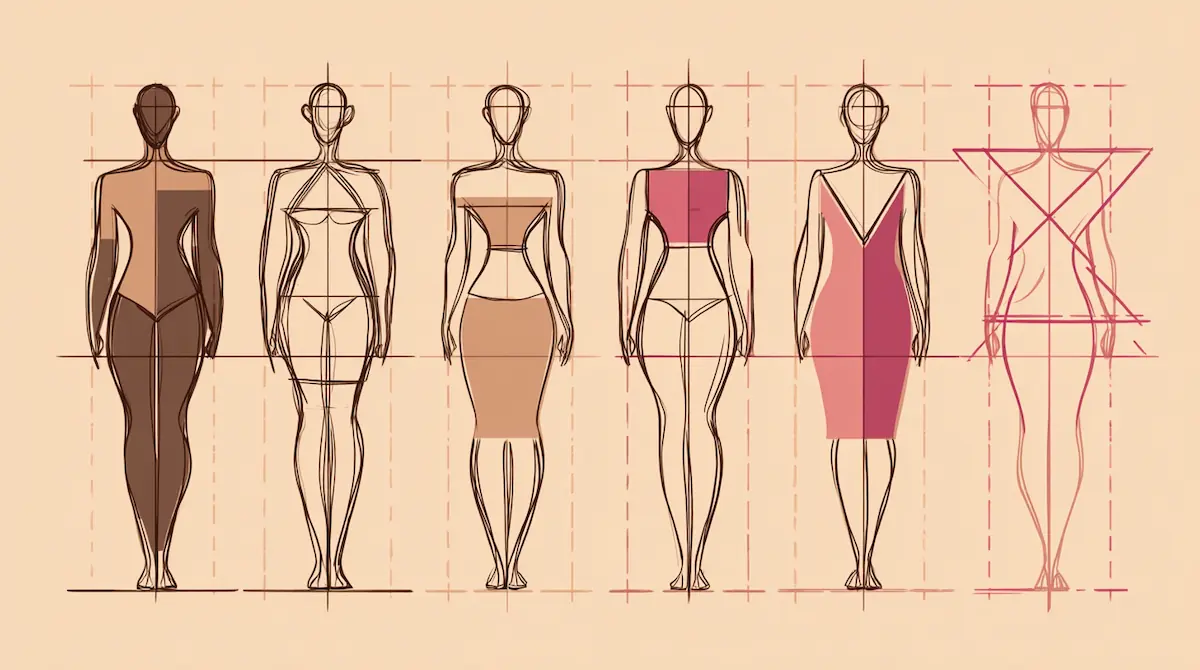
How to Find Your Body Shape: A Data-Driven Guide for Men and Women
Learn how to identify your body shape from 12 categories using key measurements. Understand why body shape analysis matters for choosing flattering clothing, with specific tips for Indian body types.